Buyer Guides
How to Choose a Golf Rangefinder
Working out how to choose a golf rangefinder gets confusing fast, mostly because the spec sheets all look similar until you know what actually matters. Accuracy figures, magnification, slope technology, water resistance ratings, they all sound like marketing until you understand what each one changes about how the device performs on the course. This guide breaks down the real decisions, not just the buzzwords.
Rangefinder vs GPS: What’s the Actual Difference?
A laser rangefinder measures the exact distance to whatever you point it at, typically the flag, a hazard, or a tree, using a beam of light and a target-lock system to confirm the read. A GPS device (a watch or a handheld) instead uses satellite positioning against a pre-mapped course to give you distances to the front, middle and back of the green without needing to physically aim at anything.
Neither is strictly better. A rangefinder gives you pinpoint accuracy to whatever you can see, which matters most for approach shots to the flag. A GPS device gives you a fuller picture of the hole at a glance, including hazards and doglegs you can’t see from the tee, without needing line of sight. Some devices, like the Garmin Approach Z10, genuinely combine both, syncing laser readings to a compatible GPS device for the best of each.
Accuracy: What the Numbers Actually Mean
Most rangefinders in this category are rated accurate to within 1 or 2 yards. That sounds like a meaningful gap on paper, but in practice, a 1-yard rangefinder and a 2-yard rangefinder will both get you close enough to pick the right club for the vast majority of shots. Where the difference genuinely matters is longer approach shots, where an extra yard or two of uncertainty has more impact on club selection. If you regularly hit long irons or hybrids into greens, prioritise a 1-yard-rated device. For most golfers, either tolerance is fine.
Slope Technology: Useful, But Not Always Legal
TSlope (sometimes called ID, incline/decline, or adaptive slope depending on the brand) calculates the elevation change on a shot and gives you an adjusted distance that accounts for playing uphill or downhill. It’s genuinely useful for casual rounds, since a flat yardage doesn’t tell you how far the ball will actually fly on a sloped hole.
The catch: slope-adjusted distances are not permitted under the Rules of Golf during competitive play, unless your slope function can be switched off. Nearly every modern rangefinder with slope includes an off switch or a separate non-slope mode specifically for this reason, but it’s worth checking before you buy if you play in competitions regularly. Devices without slope at all, like the Nikon CoolShot 20 GIII, are tournament-ready by default, with nothing to remember to switch off.
Target-Lock Confirmation: Why a Vibration Matters More Than You’d Expect
Nearly every rangefinder above entry level includes some form of confirmation, usually a vibration, sometimes paired with a visual cue, that tells you when it’s genuinely locked onto the flag rather than a tree or a golf cart behind it. This sounds like a small detail until you’ve used a rangefinder without it: on a background-heavy hole, it’s easy to get a distance reading to the wrong object entirely without realising. If you play courses with a lot of tree lines or elevation change behind the green, this feature is worth prioritising over almost anything else on the spec sheet.
Magnification and Range: More Isn’t Always Necessary
Most rangefinders sit at 6x magnification, which is more than enough for reading a flag at typical approach distances. A small number of premium models step up to 7x for a marginally clearer view at long range. Maximum range figures (800 yards, 1,200 yards, and so on) matter far less than they look, since you’ll rarely need a distance reading anywhere near that far in an actual round. Where a longer range does help is scanning mode, letting you read hazards and layup distances well ahead of your ball.
Water Resistance: Check the Actual Rating, Not Just the Word “Waterproof”
This is one area worth reading carefully rather than trusting a single word. Ratings range from no stated protection at all, through general “rainproof” or “resistant” claims, up to a specific IPX4 rating, which means genuine, tested protection against splashing water from any direction. IPX4 or higher is what you want if you regularly play in UK weather. A vague “resistant” claim with no rating attached is worth treating cautiously, and budget devices sometimes carry no water protection at all, which is worth knowing before a wet Saturday round rather than after.
What You Actually Get at Each Price Point
Under $150 buys a genuinely capable laser with core accuracy and target-lock confirmation, though usually without slope or water resistance. The Shot Scope PRO L2 sits here.
$150 to $250 is where slope technology, water resistance, and stronger brand pedigree start appearing together. The Nikon CoolShot 20i GIII, Callaway CSi Pro Laser, and Garmin Approach Z10 all fall in this range, each with a different angle, brand-suggested club selection, GPS device syncing, and dependable core performance respectively.
$250 and above brings faster measurement technology, longer ranges, extended warranties and premium build quality. The Nikon CoolShot 50i GII is a good example, with sub-second readings and a 5-year warranty well beyond what’s typical lower down the range.
Do I need slope technology on a golf rangefinder?
Only if you mainly play casual rounds. Slope must be switched off for competitive play under the Rules of Golf, so if you play mostly in competitions, a non-slope device or one with a reliable off switch works just as well.
What accuracy rating should I look for in a golf rangefinder?
Within 1 to 2 yards is standard and sufficient for most golfers. Prioritise the tighter 1-yard rating if you regularly hit long approach shots.
Is a rangefinder or a GPS watch better for golf?
Neither is strictly better. A rangefinder gives precise distance to a specific target, while a GPS device gives a fuller view of the hole without needing line of sight. Some devices now combine both.
What water resistance rating should a golf rangefinder have?
Look for a specific IPX4 rating or higher if you regularly play in wet weather. A vague “resistant” claim without a rating is worth checking further before you buy.
- Garmin Approach Z10 Rangefinder Review (2026): Great If You’re Already a Garmin Golfer
 Our Garmin Approach Z10 rangefinder review covers Range Relay syncing, PlaysLike Distance and a full year of battery life – and who it’s genuinely worth buying for.
- Best Golf Stand Bags (Fall 2026): 5 Picks for Walking, Riding and Rain
 Our guide to the best golf stand bags for fall 2026, with five picks from Titleist, Big Max, Ogio, Ping and Sun Mountain, including waterproof and hybrid options that work on a cart.
- Callaway CSi Pro Laser Rangefinder Review (2026): Fast Pin Lock at a Discounted Price
 Our Callaway CSi Pro Laser rangefinder review covers Pin Acquisition Technology, tournament-legal slope switching and genuine value now that it’s discounted to $199.99.
- Shot Scope PRO LX Rangefinder Review (2026): Rapid-Fire Detection, Slope Tech and Real Water Resistance
 Our Shot Scope PRO LX rangefinder review covers Rapid-Fire detection, adaptive slope technology and genuine water resistance – a meaningful step up from the entry-level PRO L2.
- Shot Scope PRO L2 Rangefinder Review (2026): Premium Features at a Budget Price
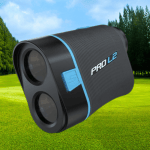 Our Shot Scope PRO L2 rangefinder review covers accuracy, slope technology and value – a genuinely capable laser rangefinder at one of the most accessible prices in the category.
- Nikon CoolShot 50i GII Rangefinder Review (2026): Nikon’s Premium Step Up
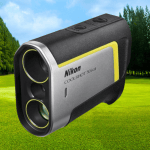 Our Nikon CoolShot 50i GII rangefinder review covers Hyper Read speed, Dual Locked On Quake, IPX4 rain protection and a 5-year warranty, and whether it’s worth the jump from the CoolShot 20i GIII.
- Ping Handwarmer Review: The #1 Winter Accessory Every That’s Perfect For Chilly Rounds
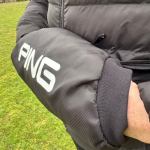 This Ping handwarmer review covers a lightweight winter golf accessory that keeps hands warm between shots, reduces the need for bulky gloves, and earns its place in every winter golfer’s bag.
- Nikon CoolShot 20i GIII Rangefinder Review (2026): The Slope-Enabled Upgrade
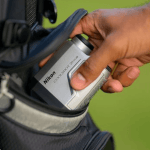 Our Nikon CoolShot 20i GIII rangefinder review covers ID slope technology, Locked On Quake vibration and a rainproof build, and whether the extra $40 over the 20 GIII is worth it.
- Nikon CoolShot 20 GIII Rangefinder Review (2026): Simple, Fast and Tournament-Ready
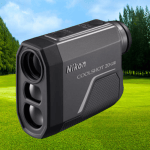 Our Nikon CoolShot 20 GIII rangefinder review covers First Target Priority, Locked On Quake vibration and a rainproof build, plus who should pay $40 more for the slope-enabled 20i GIII.