
Click here to see our other reviews…
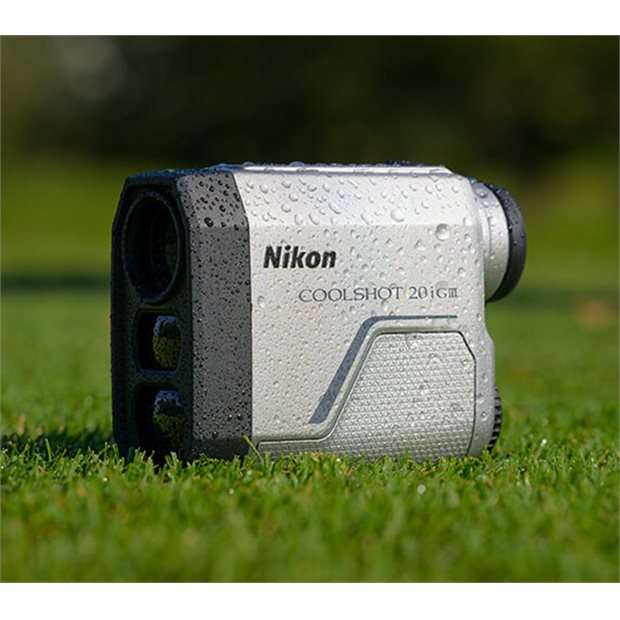
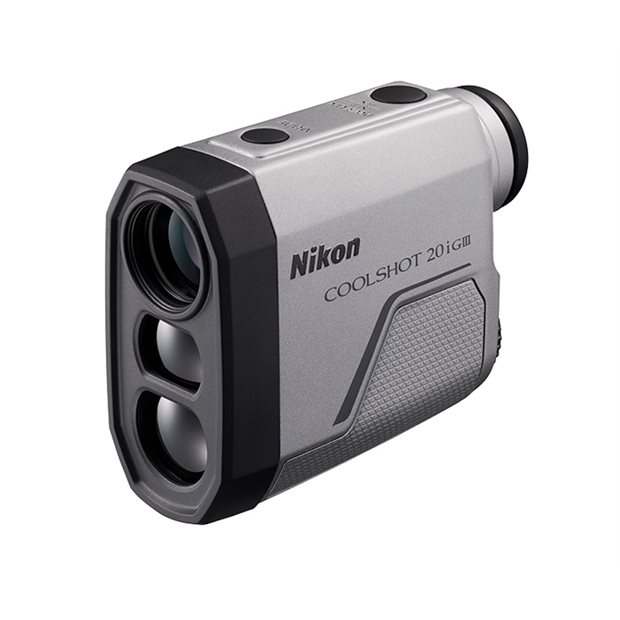
The Nikon CoolShot 20i GIII rangefinder is built on the same compact, dependable platform as the standard 20 GIII, with one addition that changes who it’s for: ID (incline/decline) technology, giving you slope-adjusted distances for uphill and downhill shots alongside the straight-line number. At $239.95, it costs $40 more than the 20 GIII, and that single feature is the whole reason to choose it.
Our Nikon CoolShot 20i GIII Rangefinder Review
| ✅ What we liked: | ❎ What we didn’t: |
|---|---|
| ID technology adds slope-adjusted distances for elevation change | Accuracy is within 2 yards rather than sub-yard |
| Locked On Quake vibration confirms the flag, not the background | No cart magnet |
| First Target Priority ignores what’s behind the pin | |
| Built to keep working in rainy conditions | |
| Compact 4.6oz body with case and CR2 battery in the box |
Nikon CoolShot 20i GIII Rangefinder
$239.95
The slope-enabled step up from Nikon’s standard CoolShot 20 GIII. ID technology gives you elevation-adjusted distances at the press of a button, backed by the same Locked On Quake vibration and rainproof build.
If you click and make a purchase we may earn a small commission at no extra cost to you.
What Makes the Nikon CoolShot 20i GIII Stand Out
ID Technology: Slope Where You Want It
The headline addition over the standard 20 GIII is ID (incline/decline) technology, which factors elevation change into your yardage and displays a guide distance for how far the ball should actually play on an uphill or downhill shot. A single press of the mode button switches between golf mode (slope-adjusted and actual distance together) and actual distance mode, so you can turn slope off in seconds when the round calls for it.
A Vibration That Confirms the Pin
Like the standard 20 GIII, the 20i uses Locked On Quake, a brief vibration the moment the distance to the flagstick has been measured, so you know the number belongs to the flag rather than the trees behind it. First Target Priority backs this up by prioritising the closest target when several overlap.
6x Magnification and an 800-Yard Range
The 6×20 optics measure from 6 to 800 yards within 2 yards of accuracy, identical to the standard 20 GIII. A scan mode lets you pan the landscape for up to 8 seconds for a running read of the distances around you.
Built for Damp Days
The CoolShot 20i GIII is built to keep working in rainy conditions, so a wet morning round shouldn’t be a problem. As with the 20 GIII, it isn’t rated for submersion.
The Only Real Difference From the 20 GIII
The Nikon CoolShot 20i GIII vs 20 GIII comparison comes down to one feature. Physically, the two rangefinders are near-identical, same optics, same magnification, same range, same vibration confirmation. The 20i adds ID slope technology for $40 more. If you play mostly social rounds and want elevation-adjusted numbers, that’s a reasonable premium. If you play a lot of competitive golf and would just be switching slope off most of the time, the standard 20 GIII does the same core job for less.
Ease of Use
The 20i GIII is a straightforward point-and-press rangefinder, with the mode button as the only real extra step over the standard 20 GIII. Switching out of golf mode into actual distance mode takes one press, which matters if you’re playing somewhere that requires slope-adjusted devices to be switched off. It comes with a case and a CR2 battery in the box, and 16mm of eye relief makes it easy to find a comfortable view.
Price & Value
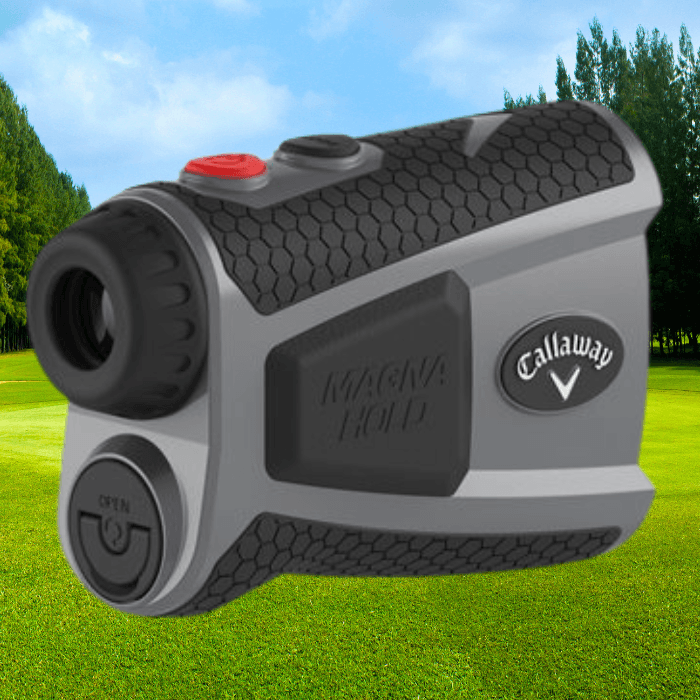
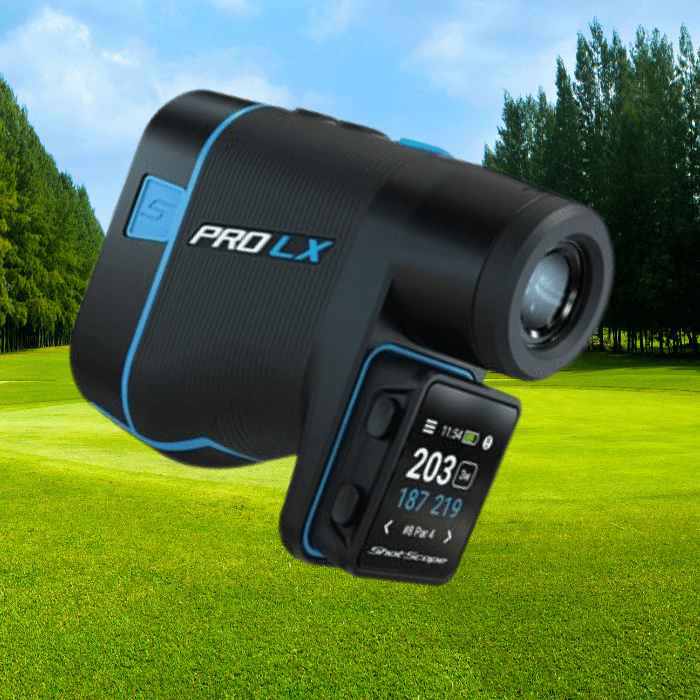
The Nikon CoolShot 20i GIII price is $239.95, $40 more than the standard 20 GIII. That’s a fair premium for genuine slope-adjusted distances on top of the same core optics and build. Against the Shot Scope PRO L2 at $149.99, the Nikon costs more but brings a more established optics brand and a rainproof build. Against the Callaway CSi Pro Laser, currently discounted to $199.99, the Callaway adds I-Caddie club suggestions for less money, though the Nikon still holds an edge on brand pedigree in pure optics.
Final Verdict
The Nikon CoolShot 20i GIII rangefinder is the version of Nikon’s compact laser to buy if elevation-adjusted yardages genuinely matter to your game. ID technology is simple to use and easy to switch off, Locked On Quake and First Target Priority carry over from the standard model, and the rainproof build holds up in typical UK weather. For golfers weighing up the best golf rangefinder with slope under $250, it’s a strong, straightforward option. If you don’t need slope, save the $40 and go with the standard 20 GIII instead.
Nikon CoolShot 20i GIII Rangefinder
$239.95
If elevation-adjusted yardages matter to your game, this is the one to buy. Simple to use, easy to switch off for competitions, and built on the same dependable optics as the rest of the CoolShot range.
If you click and make a purchase we may earn a small commission at no extra cost to you.
| Quick Specs | |
|---|---|
| Price | $239.95 |
| Accuracy | Within 2 yards |
| Magnification | 6x |
| Range | 6 to 800 yards |
| Battery | CR2, included |
| Slope | ID technology, switchable |
| Water Resistance | Rain-resistant, not submersible |
| Weight | 4.6 oz |
Does the Nikon CoolShot 20i GIII have slope?
Yes. ID (incline/decline) technology gives slope-adjusted distances alongside the actual distance, switchable with a single button press.
Nikon CoolShot 20i GIII vs 20 GIII: what’s the difference?
The two rangefinders are physically almost identical, sharing the same 6x magnification, 800-yard range and Locked On Quake vibration. The 20i GIII adds ID slope technology for $239.95 versus $199.95 for the standard 20 GIII.
Is the Nikon CoolShot 20i GIII legal for tournament play?
It can be used in competitions as long as slope mode is switched off, since ID technology otherwise measures elevation-adjusted distance.
Is the Nikon CoolShot 20i GIII waterproof?
It’s built to keep working in rainy conditions, but it isn’t rated for submersion.
How accurate is the Nikon CoolShot 20i GIII?
It measures from 6 to 800 yards within 2 yards of accuracy, the same as the standard 20 GIII.